

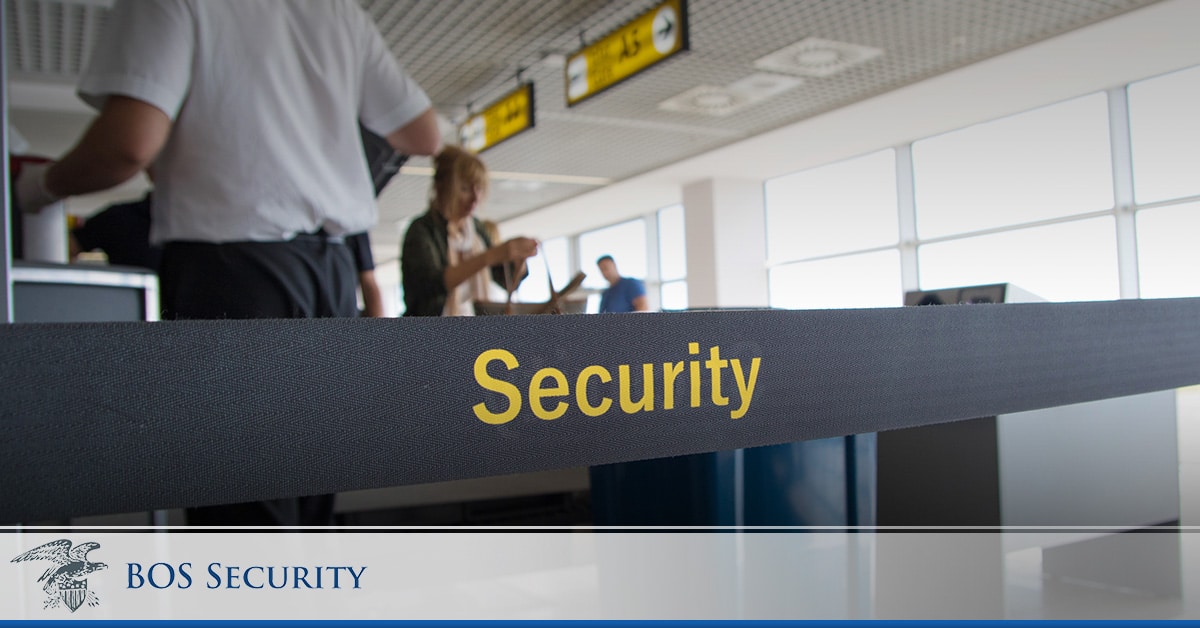
Airport security plays a vital role in ensuring the safety of passengers and protecting civil aviation from unlawful interference. However, the standards and practices for airport screening vary significantly across the globe due to differences in regulatory frameworks, cultural attitudes, and perceived threat levels. This blog explores how airport security protocols differ worldwide, highlighting key regional practices and innovations.
United States Airport Security: Rigorous and Technology-Driven
The Transportation Security Administration (TSA) is the federal agency responsible for regulating and enforcing airport security standards in the United States. Some standout security measures implemented by the TSA include:
- Advanced Imaging Technology (AIT) Scanners
- Liquid Restrictions: the 3-1-1 Rule
- Random Secondary Screenings
- TSA PreCheck Program for Expedited Screening for Trusted Travelers
The TSA also partners with private companies in the Screening Partnership Program (SPP). Qualified private companies, who are also IDIQ holders, can run screening operations at commercial airports under federal oversight and compliance with TSA screening procedures.
The TSA expanded the SPP in 2026, launching the TSA Gold+ program. TSA Gold+ aims to make the adoption of modern security technologies faster and more efficient. Screening partners will now be able to manage more aspects of their checkpoint operations, while remaining under federal oversight.
This represents a push towards privatizing airport security in the United States.
European Union: Harmonized Airport Screening Regulations
The EU operates under Regulation (EC) No 300/2008, which standardizes airport security measures across member states. All airports follow uniform guidelines for passenger and baggage screening, with additional checks for international flights. Some countries, like the Netherlands, have adopted advanced CT scanners allowing passengers to leave liquids and electronics in their bags during screening.
Key differences within the EU include:
- France: Enhanced ID checks under the Vigipirate program.
- Sweden: Minimalist approach influenced by its traditionally low-crime environment.
- Iceland: Exempt from domestic flight security checks due to geographic isolation.
Canada: Biometric Innovations in Airport Security
Canada’s airport security is overseen by the Canadian Air Transport Security Authority (CATSA). It employs cutting-edge technologies such as x-ray machines, explosive trace detection (ETD), and biometric access control via the Restricted Area Identity Card (RAIC) system. This dual-biometric system uses fingerprints and iris scans to secure restricted areas.
Asia-Pacific: Balancing High Traffic with Advanced Measures
Countries in Asia-Pacific adopt diverse approaches:
- Singapore: Changi Airport utilizes robust screening technologies like C3 scanners while adhering to strict liquid restrictions.
- India: The Central Industrial Security Force (CISF) oversees airport security, focusing on counterterrorism and narcotics control.
- Hong Kong: Security is managed by both police forces and private companies, with armed units patrolling sensitive areas.
Middle East: High-Security Standards
Airports in the Middle East, such as those in Dubai and Doha, are known for their state-of-the-art facilities and stringent security measures. These include comprehensive baggage screening systems and collaboration with international agencies to ensure compliance with global standards.
Africa: Emerging Airport Security Frameworks
Many African nations are enhancing their airport security protocols to meet international standards. This includes adopting biometric systems and integrating advanced surveillance technologies.
Around the Globe: Unique Airport Screening Practices
Some nations exhibit unique security measures tailored to local needs:
- United Kingdom: Introduced millimeter wave scanners for non-intrusive body scans after discontinuing backscatter x-rays.
- Netherlands: Innovative use of CT scanners at Schiphol Airport simplifies passenger experience.
Challenges in Syncing Global Airport Security Standards
Despite efforts by organizations like the International Civil Aviation Organization (ICAO) to establish universal guidelines, disparities remain:
- Variations in threat perception influence the intensity of screenings.
- Resource constraints in developing nations can hinder the implementation of advanced technologies.
- Privacy concerns differ widely across cultures, affecting acceptance of more intrusive measures like full-body scanners.
Conclusion: Global Airport Screening Standards
Global airport screening standards reflect a balance between ensuring passenger safety and respecting individual freedoms. While technological advancements like biometrics and CT scanners are harmonizing practices, regional differences persist due to unique cultural, economic, and geopolitical factors. Understanding these variations helps travelers navigate international airports more effectively while appreciating the complexities of global aviation security. airports more effectively while appreciating the complexities of global aviation security.
BOS Security is proud to be a trusted partner in the Transportation Security Administration’s (TSA) Screening Partnership Program (SPP) since 2009, providing private security screening services at airports nationwide. We uphold the highest federal security standards, ensuring passenger safety and operational efficiency. BOS Security delivers specialized screening services, including passenger checkpoints and baggage operations, while adhering to TSA protocols and utilizing approved technologies. Our commitment to excellence allows airports to benefit from cost-effective solutions, reduced wait times, and enhanced accountability. With BOS Security, travelers experience reliable and professional service backed by federal oversight and private sector innovation.