

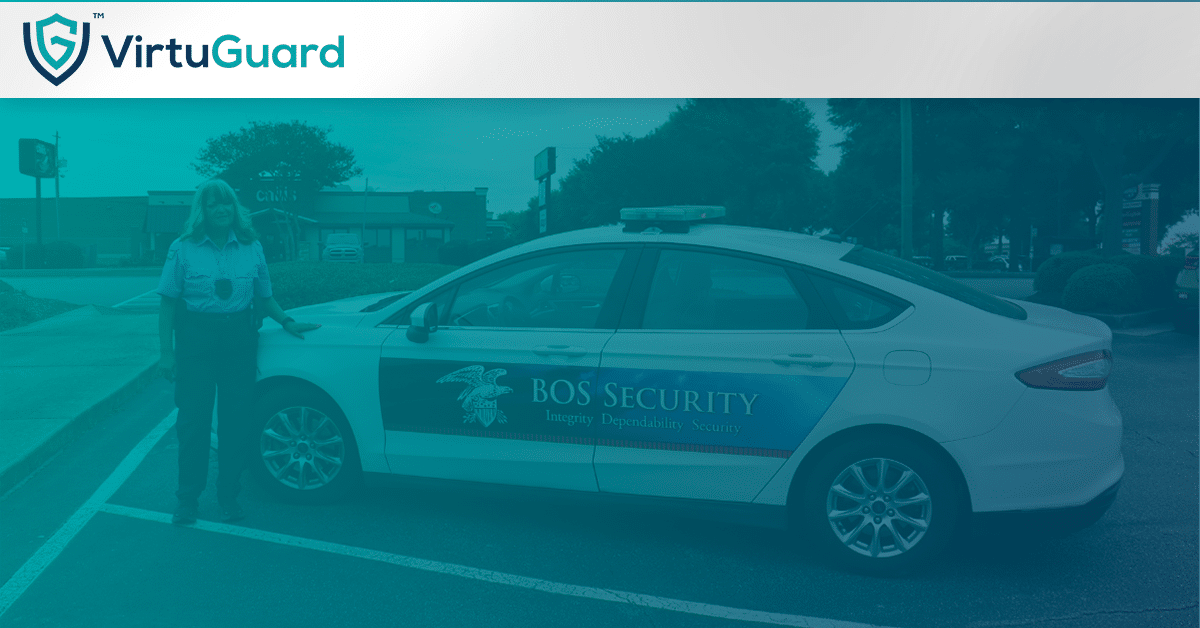
What is a Drive-By Patrol?
A drive-by patrol is a security check in which a guard drives through a property at scheduled or semi-random intervals, without stopping to investigate unless something visibly catches their attention. It’s typically billed as a lower-cost alternative to a stationed on-site guard, but because the guard is only present for a few minutes at a time, drive-by patrols leave long predictable gaps in coverage.
For businesses evaluating their security options, drive-by patrols often seem like a middle ground between paying for full-time security coverage and no security at all. There are real limitations and a growing number of businesses are replacing them with remote video monitoring solutions like VirtuGuard™.
Drive-By Patrols vs. Virtual Patrols: Quick Comparison
| Factor | Drive-By Patrols | VirtuGuard™ Virtual Patrol |
| Coverage Window | Minutes or hours between visits, scheduled gaps in between | 24/7/365 or custom hours, continuous coverage |
| Response Time | Response after incident occurs and is later discovered | Near-instant, Agents are alerted immediately to suspicious activity |
| Cost | Guard wages + vehicle + fuel per shift, scales expensively with frequency | Flat monthly camera- and activity-based pricing, typically far lower than onsite coverage |
| Predictability to Criminals | High: patrol timing can be observed and planned around | Low: monitoring is continuous and randomized, harder to predict |
| Documentation | Manual notes, dependent on an individual officer | Timestamped, recorded video and detailed incident reports |
| Scalability Across Sites | Requires additional guards and vehicles per site | Cameras and centralized Command Center are scaled without added headcount |
Why Drive-By Patrols Fall Short
Are Drive-By Patrols Effective?
Drive-by patrols are limited by design. A Security Officer drives through a property at scheduled intervals and moves on. The gaps between those visits are often 30 minutes to several hours depending on the contract, leaving long windows for unwanted or illegal activity to occur undetected. Even during a pass-through, officers rarely have time to thoroughly inspect the property or investigate anything beyond what’s visible from the vehicle.
Do Drive-By Patrols Deter Crime?
Scheduled, repeating patrol routes are observable. Criminals casing a property can clock when patrols occur and act in the gaps between them. This predictability is one of the biggest weaknesses of drive-by patrols when compared to either an on-site guard or proactive remote monitoring.
What’s the Response Time for Drive-By Patrols?
If an incident happens between patrols, the responding officer may be minutes away, long enough for criminals to finish their activity and leave before anyone arrives. That delay increases the risk of property damage and reduces the odds an incident is even noticed before damage is done.
How Much Do Drive-By Patrols Cost?
Drive-by patrols require a dedicated security guard and vehicle for each visit, and pricing scales with visit frequency. Because the guard is only on the property for a few minutes per visit, businesses often pay disproportionately for the actual security value. Plus, vehicle, fuel, and overhead costs are layered on top of every visit.
Other Limitations of Drive-By Patrols
- Limited Surveillance: Coverage is restricted to what’s visible from the vehicle on accessible roads. Interior spaces and hard to reach areas go unchecked.
- Reactive, Not Proactive: Drive-by patrols respond after an incident rather than preventing one.
- Inconsistent Documentation: Records depend on what the individual officer chooses to note.
- Human Variability: Vigilance can decline with fatigue, repetition, and turnover. The security guard industry has regularly seen high annual turnover, which can affect the consistency of service from contract to contract.
- Liability Exposure: Inconsistent documentation makes it harder to demonstrate dure diligence if an incident escalates into a legal dispute.
VirtuGuard™ Remote Video Monitoring: The Virtual Alternative
VirtuGuard™ remote video monitoring is a comprehensive security solution tailored to your property and needs. From BOS Security’s Command Centers, VirtuGuard™ Agents monitor surveillance cameras and connected security infrastructure across your property in real time. VirtuGuard™ also utilizes AI technologies and advanced video analytics to alert Agents to suspicious or illegal activity. When a threat or abnormal activity is detected, Agents respond immediately according to protocols developed with a business during onboarding.
Virtual Patrols
Virtual patrols are the closest equivalent to a drive-by or foot patrol, but they are conducted through surveillance cameras rather than a vehicle route. They can also cover building interiors without requiring physical access or presence. Virtual patrols can run at random or fixed intervals, around the clock or during specified hours, and can check multiple locations from a single Command Center, something a drive-by patrol vehicle physically cannot do.
AI Alarm Response
Artificial Intelligence (AI) and advanced video analytics expand what surveillance cameras can catch. AI can detect motion and help verify whether a triggered alert reflects a real threat or a false positive (like wildlife or a tree branch in the wind) before an Agent even reviews it. This lets Agents respond to events that a human eye might miss during a brief patrol pass and cuts down on wasted response time from false alarms.
Two-Way Audio Deterrence
Two-way audio speakers let Agents speak directly to people detected on a property. When VirtuGuard™ is alerted to a trespass, an Agent can issue a live or prerecorded warning. For example, Agents can tell an individual the property is closed and give hours of operation and escalate to a firmer warning that police will be called if the person doesn’t leave. This kind of real-time verbal intervention is not something a passing vehicle can offer.
Collaboration with Onsite Security and Local Police
VirtuGuard™ coordinates with onsite guards, directing them to the exact location of an incident. If no onsite guard is present, Agents relay details directly to local police, like location, physical descriptions, and vehicle information, so responding officers arrive prepared.
Detailed Incident Reporting
Every resolved incident generates a report with images, sent to a client’s primary contact. If an incident occurs, VirtuGuard™ documents photo and video evidence and a written report to directly support a police investigation. A drive-by patrols’ informal notes typically can’t match the detailed reporting.
Advantages of Switching from Drive-By Patrols to Virtual Patrols
- Monitoring available 24/7/365 or during specified hours
- Real time alerts to activity
- More affordable than drive-by patrols or physical security services
- Greater deterrence of unwanted or illegal activity
- Documentation and evidence
- Reduced human error
- Can be easily scaled to cover large areas or multiple locations
- Improved accountability of security professionals
- Easily integrated with other security measures
- Reduced risk of confrontation with intruders
Frequently Asked Questions
Is remote video monitoring better than a drive-by patrol?
For most properties, yes. Remote video monitoring provides continuous coverage rather than periodic drives-by, and Agents can respond to and document activity in real time instead of discovering it after the fact on the next pass.
How much does remote video monitoring cost compared to drive-by patrols?
Pricing varies by property size, camera count, and activity levels, but VirtuGuard™ is structured as a flat monthly cost rather than a per-visit guard and vehicle expense. VirtuGuard™ operates on month-to-month contracts, allowing our services to evolve with your business’s security needs.
Can virtual patrols cover the interior of a building?
Yes. Unlike a drive-by patrol, which is limited to what’s visible from a vehicle on accessible roads, virtual patrols using interior cameras can check inside a building without requiring anyone to physically enter.
Do virtual patrols use AI?
Yes. AI-assisted video analytics help distinguish real threats from false triggers (like wildlife or weather) and flag activity for a live Agent to review and respond to.
What happens when VirtuGuard™ detects a threat?
An Agent verifies the activity, can issue a live or prerecorded audio warning to the person on-site, and, if needed, escalates to onsite security or local law enforcement with real-time details about the incident.
Is remote video monitoring a more effective deterrent than drive-by patrols?
Continuous or randomized monitoring is harder for criminals to predict than a fixed patrol schedule, which is one of the primary reasons businesses cite for switching from drive-by patrols to virtual monitoring.
Switch From Drive-By Patrols to Virtual Patrols by VirtuGuard™
If you’re currently relying on drive-by patrols, VirtuGuard™ offers more consistent coverage, faster response, and stronger documentation, often at a lower overall cost. Contact BOS Security today or learn more at VirtuGuard.com.